
RIRS (Retrograde Intrarenal Surgery) for Kidney Stone Treatment in Nashik
What is RIRS (Retrograde Intrarenal Surgery)?
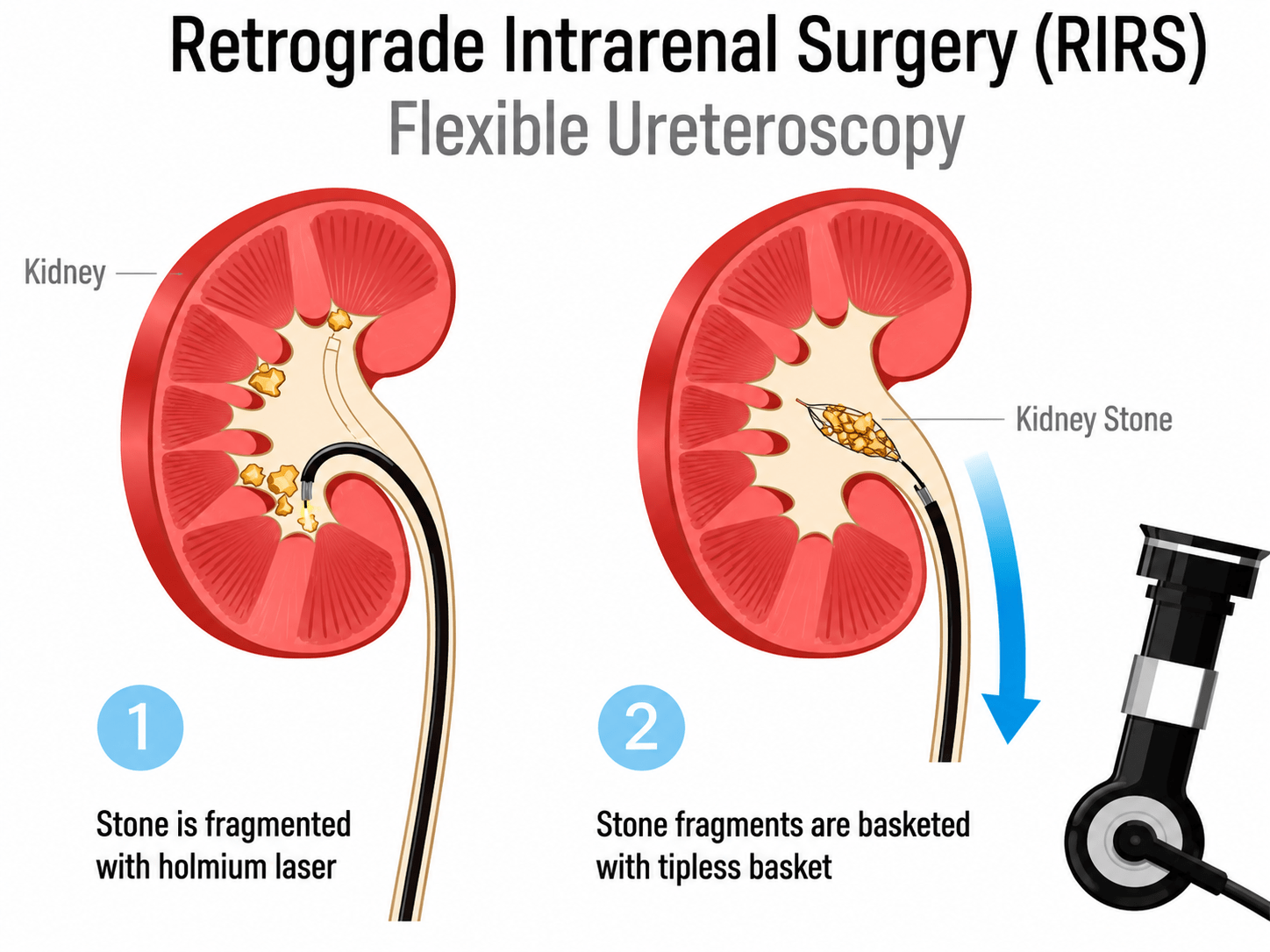
Retrograde Intrarenal Surgery (RIRS) is an advanced endoscopic procedure used to remove kidney stones without making any external incision.
During the procedure:
- A flexible ureteroscope is passed through the natural urinary passage.
- The scope reaches the kidney without any skin incisions.
- A laser is used to break the stones into tiny fragments.
- Small stone pieces are removed or allowed to pass naturally through urine.
RIRS is commonly recommended for patients with kidney stones that are difficult to treat using other methods.
When is RIRS Recommended?
RIRS may be advised in the following situations:
- Kidney stones measuring up to 2 cm or selected larger stones
- Stones located in difficult parts of the kidney
- Recurrent kidney stones
- Patients with bleeding disorders
- Obese patients where other procedures may be challenging
- Stones that remain after previous treatments
- Multiple kidney stones
The decision depends on individual medical evaluation and imaging findings.
Symptoms That May Indicate Kidney Stones
You should consult a urologist if you experience:
- Severe pain in the back or side
- Pain radiating towards the lower abdomen
- Blood in urine
- Burning sensation while urinating
- Frequent urge to urinate
- Nausea or vomiting
- Fever with urinary infection
- Difficulty passing urine
Early diagnosis helps prevent complications and protects kidney function.
How is RIRS Performed?
The procedure generally involves the following steps:
Step 1: Prior DJ stenting
Most of the times, a temporary ureteric stent is kept 2 weeks before RIRS surgery, to drain any infective focus and also for ureter to get dilated.
Step 2: Anaesthesia
The patient receives general or spinal anaesthesia.
Step 3: Flexible Ureteroscope
A thin flexible telescope is inserted through the urethra into the bladder, ureter, and kidney.
Step 4: Stone Visualization
The surgeon identifies the kidney stone using a high-definition camera.
Step 5: Laser Stone Fragmentation
A Holmium or Thulium laser breaks the stone into very small fragments or fine dust.
Step 6: Stone Removal
Tiny fragments are removed using specialized instruments or allowed to pass naturally.
A temporary ureteric stent is placed to ensure proper urine drainage and to facilitate the passage of stone fragments during healing.
Benefits of RIRS
RIRS offers several advantages, including:
- No external cuts or stitches
- Minimally invasive approach
- Reduced pain after surgery
- Short hospital stay
- Faster recovery
- Minimal blood loss
- High precision
- Suitable for difficult kidney stones
- Early return to routine activities
Recovery may vary depending on the patient’s overall health and stone burden.
Conditions Treated with RIRS
RIRS is commonly used for:
- Kidney stones
- Lower calyceal stones
- Recurrent kidney stones
- Residual stones after previous surgery
- Multiple kidney stones
- Selected upper ureteric stones
Recovery After RIRS
Most patients recover quickly following the procedure.
Recovery generally includes:
- Drinking plenty of water
- Taking prescribed medications
- Avoiding strenuous activities for a few days
- Follow-up imaging if advised
- Temporary discomfort if a DJ stent is placed
The doctor will recommend an individualized recovery plan.
Who May Be a Suitable Candidate?
RIRS may be suitable for patients who:
- Have kidney stones causing symptoms
- Need minimally invasive stone removal
- Have stones not suitable for ESWL
- Prefer faster recovery
- Have recurrent stone disease
- Are medically fit for endoscopic surgery
A detailed evaluation helps determine whether RIRS is the right treatment option.
Why Early Treatment Matters
Untreated kidney stones can lead to:
- Persistent pain
- Urinary tract infections
- Kidney swelling (Hydronephrosis)
- Reduced kidney function
- Recurrent stone formation
- Emergency hospitalization
Timely treatment helps reduce these risks.
Why Choose Dr. Lomesh Kapadnis?
Dr. Lomesh Kapadnis focuses on evidence-based urological care and advanced minimally invasive procedures for kidney stone management. Every patient undergoes a detailed clinical assessment, imaging review, and personalized treatment planning to determine the most appropriate approach.
Patients seeking Kidney stone treatment in Nashik can receive evaluation for RIRS and other advanced stone management options based on their individual condition.
Frequently Asked Questions
The procedure is performed under anaesthesia, so patients do not experience pain during surgery. Mild discomfort after the procedure usually improves with medications.
Most procedures take approximately 45 minutes to 2 hours, depending on the size, number, and location of the stones.
No. RIRS is performed through the natural urinary passage, so no external cuts or stitches are required.
Many patients are discharged within 24 hours, although the duration may vary based on recovery and individual health.
Yes. RIRS removes existing stones but does not prevent new stones from forming. Lifestyle changes, adequate hydration, and regular follow-up help reduce the risk of recurrence.
RIRS is a well-established minimally invasive procedure when performed by an experienced urologist. As with any surgery, your doctor will discuss potential risks, benefits, and expected outcomes before treatment.
Book a Consultation
If you are experiencing symptoms of kidney stones or have been advised to undergo surgery, consult Dr. Lomesh Kapadnis to understand whether RIRS (Retrograde Intrarenal Surgery) is the right option for your condition. For those seeking Kidney stone treatment in Nashik, an early evaluation can help guide timely and appropriate care.