
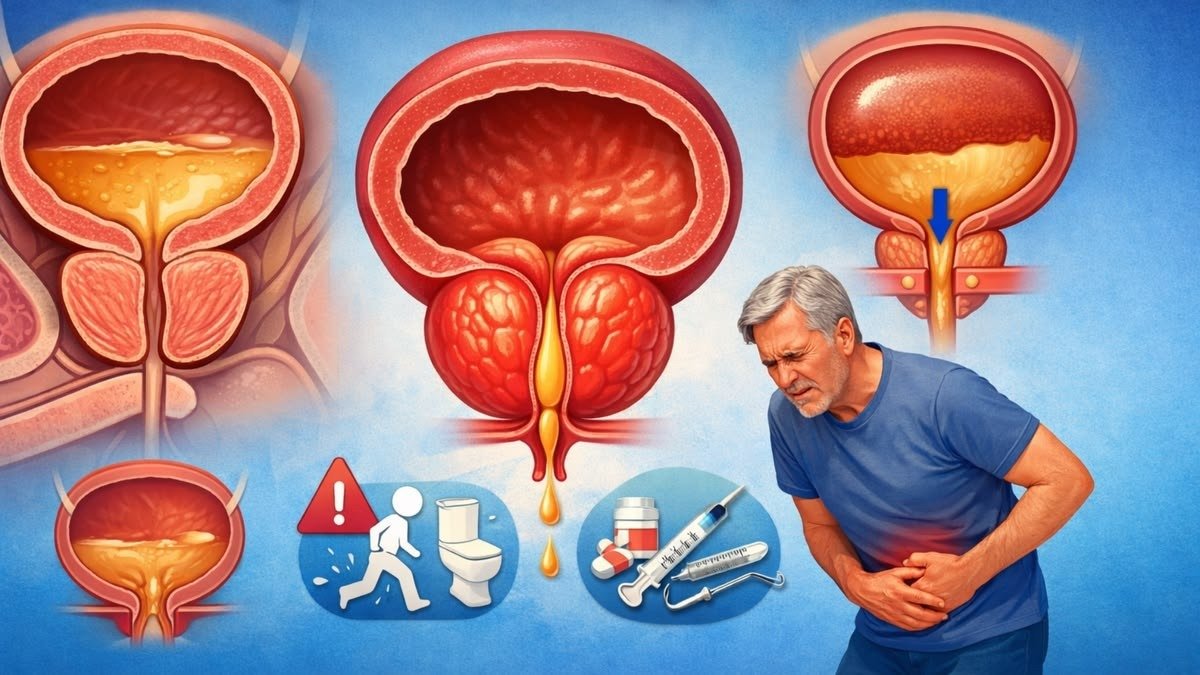
In more than two decades of practicing urology, one pattern has never changed. A man walks into my clinic, sits down, hesitates, and then says, “Doctor, I have been having this pain for a few months, but I didn’t want to make a fuss.”
Months. That is how long most men wait.
Prostate pain is one of the most common complaints I see, and one of the least discussed. Men worry about cancer, feel embarrassed, or simply hope it will go away. In my experience, the reality is far more reassuring: most prostate pain has a treatable cause, and cancer is rarely the first explanation.
In this guide, I will explain the 7 most common causes of prostate pain, how I find the exact cause, and the warning signs that mean you should not wait.
Quick summary: Prostate pain is usually felt between the scrotum and anus, in the lower abdomen, groin, or lower back, and may come with urinary or sexual symptoms. The most common causes are acute and chronic bacterial prostatitis, chronic pelvic pain syndrome, an enlarged prostate, pelvic floor muscle tension, prostate stones, and, less commonly, prostate cancer. Fever with pain, or sudden inability to pass urine, needs urgent medical care.
What Does Prostate Pain Actually Feel Like?
The prostate is a walnut-sized gland sitting just below the bladder, wrapped around the urethra. Because it is surrounded by nerves and muscles, the pain it causes is rarely sharp and easy to point to.
This is how my patients usually describe it:
- A dull ache or pressure between the scrotum and the anus
- Pain in the lower abdomen, groin, or lower back
- Discomfort in the testicles or the tip of the penis
- Burning or pain while passing urine
- Pain during or after ejaculation
- A frequent or urgent need to urinate, or a weak stream
- Pain that gets worse after sitting for a long time
The pain is often vague and comes and goes. That vagueness is exactly why so many men dismiss it for far too long.
7 Common Causes of Prostate Pain
1. Acute Bacterial Prostatitis
This is a sudden bacterial infection of the prostate, and it is one of the few prostate problems that makes a man feel properly ill. Typical symptoms include high fever, chills, severe pain between the legs, burning urination, and sometimes difficulty passing urine. This needs prompt treatment, and some patients need admission.
2. Chronic Bacterial Prostatitis
Here, the infection is milder but keeps coming back. Patients tell me, “The antibiotics worked, but the problem returned in a few weeks.” That pattern is the clue. Treatment usually needs a longer course and a proper urine evaluation, not a quick prescription.
3. Chronic Prostatitis / Chronic Pelvic Pain Syndrome (CP/CPPS)
This is the cause behind most long-term prostate pain I see, and the one that frustrates men the most. The pain lasts three months or more, yet no active infection can be found. Inflammation, nerve irritation, muscle tension, and stress can all be involved. It affects men in their twenties and thirties as well, not only older men.
4. Benign Prostatic Hyperplasia (Enlarged Prostate)
An enlarged prostate mainly disturbs urine flow: a weak stream, frequent urination, waking up at night. It is not usually painful by itself, but a bladder that cannot empty properly can lead to infection and discomfort. If this sounds familiar, read more on the enlarged prostate treatment page.
5. Pelvic Floor Muscle Tension
Many men are surprised when I tell them the prostate itself looks completely normal and the pain is coming from tight pelvic floor muscles. Long desk hours, cycling, heavy lifting, and constant stress are common triggers. This is a very treatable cause, and it is often missed.
6. Prostate Stones or Calcifications
Small calcium deposits can form inside the prostate, often after past inflammation. Many cause no trouble at all and are found by chance on an ultrasound. In some men, they are linked with recurring pelvic discomfort or urinary symptoms.
7. Prostate Cancer (Less Common)
Early prostate cancer usually causes no pain whatsoever, which is why screening matters. Pain generally appears at more advanced stages. If I see blood in the urine or semen, persistent bone pain, or a raised PSA, I investigate it fully and without delay.
Conditions That Can Feel Like Prostate Pain
Not every ache in that area comes from the prostate. Before settling on a diagnosis, I always rule out conditions that copy its symptoms:
- Urinary tract infection or urethritis
- Kidney or ureteric stones, which can send pain down to the groin
- Epididymitis (inflammation near the testicle)
- Hernia
- Piles or other anal conditions
- Urethral narrowing
This is why self-diagnosis from the internet rarely works. Different conditions can feel almost identical.
When Is Prostate Pain an Emergency?
Please do not wait if prostate pain comes with any of the following:
- High fever with chills
- Sudden inability to pass urine
- Severe pain that is rapidly getting worse
- Blood in the urine along with significant discomfort
- Confusion or severe weakness
Acute prostate infections and urinary retention can become serious quickly. Early treatment prevents complications.
How I Find the Cause of Prostate Pain
Men often imagine the evaluation will be painful or humiliating. It is neither. This is how I usually proceed:
- A detailed conversation. Where the pain is, how long it has lasted, what makes it better or worse, and any urinary or sexual symptoms. This alone often points toward the cause.
- Physical examination, including a digital rectal examination when it is appropriate.
- Urine tests and urine culture to check for infection.
- PSA blood test when indicated. Infection can raise PSA temporarily, so timing and interpretation matter.
- Ultrasound of the kidneys, bladder, and prostate, along with a check of how well the bladder empties.
- Uroflowmetry to measure the strength of the urine stream.
- MRI or further tests in selected cases, particularly when cancer needs to be ruled out.
How Is Prostate Pain Treated?
The treatment depends entirely on the cause. This is what I commonly use:
- Antibiotics for bacterial infections, sometimes for several weeks in chronic cases
- Alpha-blockers and anti-inflammatory medicines to relax the urinary passage and ease pain
- Pelvic floor physiotherapy and relaxation techniques for muscle-related pain
- Treatment of an enlarged prostate with medication or, when needed, surgery
- Lifestyle changes, listed below
- Further evaluation and treatment whenever cancer is suspected
Chronic pelvic pain usually needs a combined approach and some patience. Improvement is often gradual, but in my experience, most men do get real relief once the right cause is addressed.
Everyday Habits That Help
Alongside treatment, these small changes make a visible difference:
- Do not sit for long stretches; stand and walk every 30 to 45 minutes
- Use a cushioned seat, and cut down on long bike rides if they trigger pain
- Drink enough water through the day
- Reduce caffeine, alcohol, and very spicy food if they worsen symptoms
- Try warm baths to relax the pelvic muscles
- Manage stress with exercise, good sleep, and relaxation
- Avoid holding urine for long periods
My Advice After 20+ Years in Urology
Please do not suffer in silence. Prostate pain is common, it is not a sign of weakness, and it is almost never something to be embarrassed about. The men who recover best are usually the ones who come in early, ask questions openly, and stick with the treatment plan. What I see most often at the end of a consultation is relief, simply from finally having a clear explanation.
Book an appointment with an experienced prostate treatment doctor in Nashik for confidential evaluation and a clear, personalized treatment plan.
Frequently Asked Questions
- What causes prostate pain in men? The most common causes are bacterial prostatitis, chronic pelvic pain syndrome, an enlarged prostate, pelvic floor muscle tension, and prostate stones. Prostate cancer is a less common cause and usually produces pain only in later stages.
- Is prostate pain a sign of prostate cancer? Usually not. Early prostate cancer typically causes no pain, and most prostate pain is linked to infection, inflammation, or muscle tension. Even so, persistent symptoms, blood in the urine or semen, or a raised PSA should always be checked by a urologist.
- Where is prostate pain felt? Prostate pain is commonly felt between the scrotum and the anus, in the lower abdomen, groin, lower back, or testicles, and sometimes at the tip of the penis. It may worsen with sitting, urination, or ejaculation.
- Can prostate pain go away on its own? Mild irritation may settle by itself, but pain that lasts more than a few days, keeps returning, or comes with fever or urinary symptoms should be evaluated. Untreated infections can worsen or become chronic.
- When should a man see a urologist for prostate pain? A urologist should be consulted if pelvic pain lasts more than a week or two, returns repeatedly, or comes with burning urination, a weak stream, blood in the urine, or sexual symptoms. Fever with pain, or being unable to urinate, calls for urgent care.
This article is meant for general information and does not replace a proper medical consultation. Anyone experiencing symptoms should seek an in-person examination for accurate diagnosis and advice.
About the Author
Dr. Lomesh Kapadnis is a consultant urologist with 20+ years of experience, based in Nashik and practicing at Siddhidata Urology & Maternity Clinic. He specializes in kidney stone management (including RIRS, PCNL, and ureteroscopy), enlarged prostate treatment, urinary incontinence, andrology, and reconstructive urology
Have questions before booking? Contact us here or check our FAQs page for more general queries. You can also read patient testimonials to see what others have experienced at the clinic.
Leave feedback about this